
Next batch starts:25/11/2026
AI · Machine learning · Python
Build the skills behind today's AI products: write Python for data work, train and evaluate machine learning models, then move to deep learning for images and text. Pick a 60-hour course or the longer six-month diploma.
50,000+
Students
100%
Career help
70+
Programs
Course details
Duration
60 hours (course); 6 months (diploma)
Language
Hindi | English
Mode
Virtual instructor-led, pre-recorded sessions and offline classroom
Contact
+91 951 380 5401
FutureSkills Prime partner — MeitY and NASSCOM initiative for industry-aligned digital skills.

01
What learning AI here looks like
Artificial intelligence is not a single skill. It sits on top of programming, statistics and data handling, and this course is arranged in that order. You start by writing Python, then clean and explore data, then train classic machine learning models before reaching neural networks.
Each stage ends with practical work, and the six-month diploma adds real-world project implementation. Learners receive study material in soft and hard copies and finish with a certificate of completion that is backed by internal exams.
02
Learning path
- 1
Python for data
Cover syntax, functions, object-oriented code, file handling, web scraping, NumPy, Pandas and visualisation.
- 2
Machine learning
Move through exploratory analysis, regression, classification, ensembles, tuning and unsupervised methods.
- 3
Deep learning and AI
Work with neural networks, computer vision, object detection, text processing and sequence models.
- 4
Apply it
Finish with project work that uses the models on realistic data.
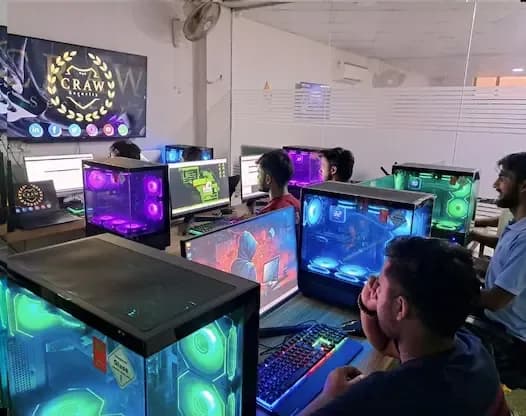
Inside our hands-on training labs





Syllabus
Course content, module by module
01Python Programming for Data Science
- 1. Introduction
- Programming language introduction
- Translators (Compiler, Interpreter)
- Uses of computer programs
- Algorithm
- Flow chart
- 2. Python Introduction
- History
- Why python created
- Fields of use
- Use of Python in Cybersecurity
- Reasons for using Python
- Syntax
- Installation of IDE
- 3. Variables
- What is variable
- Declaration rules
- Multiple variable declarations
- Valid and invalid variables
- Type casting
- 4. Data Type
- Introduction
- Discuss all data types
- Use type() to show dynamically typed language
- String
- List
- List: List Comprehension
- Tuple
- Dictionary
- Set
- 5. Operators
- Introduction
- Arithmetic operators
- Assignment operators
- Comparison operators
- Logical operators
- Identity operator
- Bitwise operator
- Membership operator
- 6. Control Flow
- Introduction to Conditional Statement
- Conditional Statement: if
- Conditional Statement: elif
- Conditional Statement: else
- Conditional Statement: Nested if
- Introduction to Looping
- Looping: for loop
- Looping: While loop
- Looping: Nested loop
- 7. Function
- Introduction function
- Declaration, calling of function
- Lambda function
- Filter
- Reduce function
- Map function
- 8. File Handling
- Introduction
- Text file handling
- Binary file handling
- 9. Object Oriented Programming
- Introduction
- Difference b/w procedural programming and OOPS
- Class
- Object
- Encapsulation
- Inheritance
- Abstraction
- Polymorphism
- 10. Web Scrapping
- Introduction
- Introduce basic HTML tags
- Introduction to Requests Library
- Introduction to bs4
- Scrapping through Beautiful Soup
- 11. Numpy
- Creating NumPy arrays
- Properties of Array
- Indexing and Slicing
- Aggregate Functions
- Numpy Functions
- Vectorization
- Broadcasting
- Boolean indexing
- 12. Pandas
- Series
- Data Frame
- Data Frame Properties
- Data Frame indexing and slicing
- Reading data from various sources
- Dataframe Functions
- Pandas Functions
- Filter Data
- 13. Visualization
- Introduction to Matplolib and Seaborn
- Properties of plots
- Line plot
- Histogram / Distplot
- Bar plot/ Count Plot
- Pie Chart
- Heat Map
- Scatter Plot
- Box Plot
02Artificial Intelligence
- 1. Artificial Neural Network and Regularization
- Single layered ANN
- Multiple Layered ANN
- Vanishing Gradient problem
- Dropout
- 2. Introduction to Deep Learning
- Difference between ML, DL, and AI
- Activation functions
- Gradient Descent
- 3. Computer Vision & OpenCV
- What is Computer Vision
- History of Computer Vision
- Tools & Technology used in Computer Vision
- Application of Computer Vision
- What is OpenCV
- Installation of OpenCV
- The first program with OpenCV
- Reading & Writing Images
- Capture Videos from Camera
- Reading & Saving Videos
- 4. Image Classification
- Haar Cascade Classifier
- Image Classification with CNN
- 5. Object Detection
- What is Object Detection
- Object Detection using Haar Cascade
- 6. Introduction to NLP
- What is Natural Language Processing
- Uses of NLP
- Application of NLP
- Components of NLP
- Stages of NLP
- Chatbot
- 7. Text Preprocessing
- Tokenization
- Non-Alphabets Removal
- Bag of Words
- Stemming & Lemmatization
- 8. Sentiment Analysis
- What is Sentiment Analysis
- Challenges in Sentiment Analysis
- Handling Emotions
- Sentiment Analysis with ANN
- 9. Sequence Model
- Sequential Data
- Recurrent Neural Network
- Architecture of RNN
- Vanishing Gradient Problem in RNN
- Long Short-Term Memory
03Machine Learning
- 1. Welcome to the ML experience
- Importance of ML in your career
- AI FAMILY TREE
- System requirements
- Prerequisites
- 2. Machine learning basics
- What is machine learning
- Classification and regression
- Supervised and Unsupervised
- Preparing for your ML journey
- 3. EDA and Preprocessing
- Reading/Writing Excel, CSV, and Other File Formats
- Basic EDA (Info, Shape, Describe)
- Handling Missing Values
- Handling Outliers
- Handling Skewness
- Encoding Categorical Data (One-Hot, Label Encoding)
- Data Normalization and Scaling (MinMax, Standard Scaler)
- Feature Engineering
- Correlation Analysis and Heatmaps
- Train-Test Split & Cross-validation Strategy
- 4. Introduction to Regression
- Simple Linear Regression
- Multiple Linear Regression
- Lost and Cost Function (Mean Squared Error)
- Regression Evaluation Metrics
- Assumptions of Linear Regression
- Polynomial Regression
- 5. Regularization
- Overfitting vs Underfitting
- Bias Variance trade-off
- Ridge and Lasso Regularization
- Cross Validation
- 6. Introduction to Classification
- Introduction to Logistic Regression
- Model Evaluation: Accuracy, Precision & Recall
- Model Evaluation: F1 Score, Confusion Matrix
- SVM
- Decision Tree
- 7. Ensemble Learning
- What is Ensemble Learning
- Bagging
- Random Forest
- Introduction to Boosting
- Boosting: Adaboost
- Boosting: Gradient Boost
- Boosting: XG Boost
- 8. Introduction to Hyperparameter Tuning
- Hyperparameter Tuning: GridsearchCV
- Hyperparameter Tuning: RandomizedSearchCV
- Model Selection Guide
- Selecting the Right Evaluation
- 9. Unsupervised ML
- Introduction to Clustering
- K-Means Clustering
- Principal Component Analysis
03
Ways to study
Virtual instructor-led
Join the trainer live from home.
Pre-recorded sessions
Watch recordings at your own pace.
Offline classroom
Attend in person in Delhi.
Choose your length
A 60-hour course for a focused skill, or a six-month diploma for a deeper programme.
04
Industries that use these skills
- Finance and banking, for risk and fraud models
- Healthcare analytics
- E-commerce and retail forecasting
- Cyber security, for threat detection
- Any business that works with large amounts of data
Placements
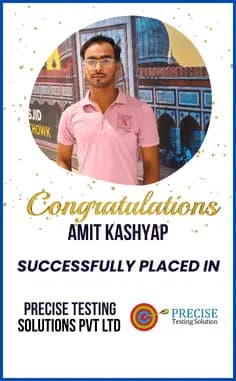
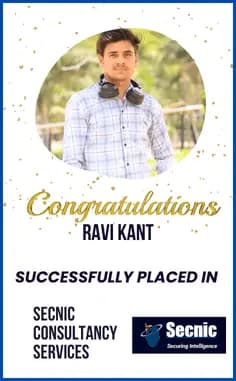
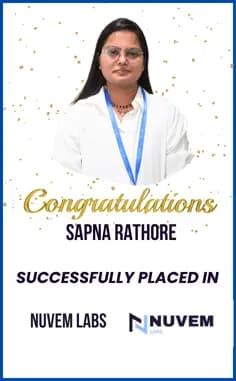
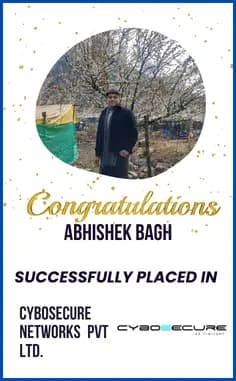
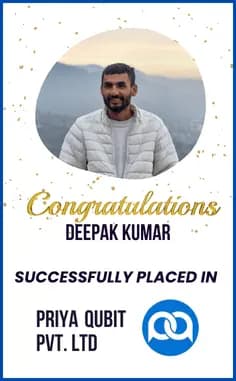
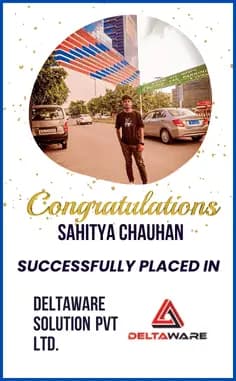
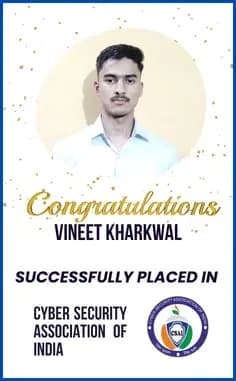
Recent Placement Success Stories
Meet the graduates who turned training into careers















Recognition
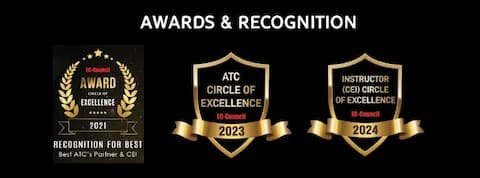
EC-Council Circle of Excellence


Named Best ATC Partner and Best CEI by EC-Council in consecutive years
Government & defence
Defence Training
Tailored programmes for armed-forces personnel and government departments

Indian Air Force

Indian Navy

Dept. of Military Affairs
Integrated Defence Staff
Indian Air Force
Indian Navy
Dept. of Military Affairs
Integrated Defence Staff
Companies that have hired our graduates










Frequently asked questions
How long is the artificial intelligence course?
The course runs for 60 hours. A separate diploma in AI and machine learning lasts six months.
Do I need to know programming first?
No. The syllabus begins with Python, including variables, data types and functions, so you can start from scratch.
What will I be able to build after the course?
You will be able to prepare data, train regression and classification models, and work with neural networks for images and text.
Can I attend online?
Yes. Virtual instructor-led classes and pre-recorded sessions are offered, as well as offline classes.
Will I get a certificate?
Yes, a certificate of completion is issued, along with internal exams.
How do I know the fee and the next batch?
Contact the team through WhatsApp or +91-9513805401 and request a free demo to see the current details.
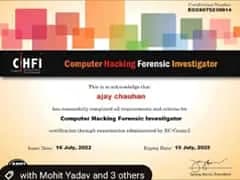
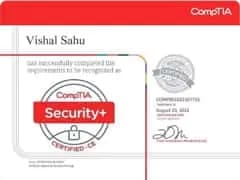
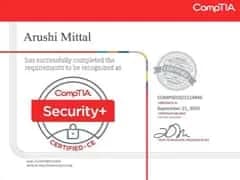
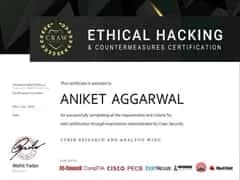
Certificates earned by our learners


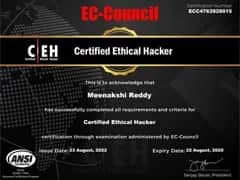
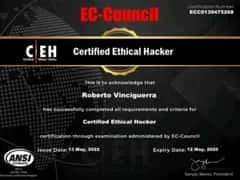

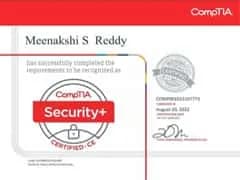
What our learners say

Saket Chaudhary
NewI recently completed my CEH Practical course and exam from Craw Security, and the experience was truly exceptional. The course was well-structured, covering all essential aspects with hands-on practical training. The mentors were incredibly supportive throughout the journey, especially my instructor, Mohit Kumar Sir, whose guidance and expertise played a crucial role in my learning process. His dedication and willingness to help made the course even more valuable. I highly recommend Craw Security to anyone looking to enhance their cybersecurity skills. A well-deserved 5 out of 5 stars 🤩

Philis Mutamba
Really enjoyed my CEH training with Craw Security. My trainer Robin Paul was patient, clear, and very knowledgeable. The course structure and hands-on sessions were really really helpful.

Kashish Jaiswal
I recently completed my CEH (Certified Ethical Hacker) training at Craw Security, and also took the CEH certification exam. My overall experience was highly positive. The training was well-structured and delivered by experienced instructors (Mohit Sir) who had in-depth knowledge of ethical hacking concepts. The course covered a wide range of topics, They were patient in clearing doubts and ensured that all students, regardless of their prior experience, could grasp the topics effectively. The institute provided excellent guidance on exam preparation, including practice tests, study materials, and exam-taking strategies. Their support team was also helpful in scheduling the exam and addressing any queries related to certification. I highly recommend Craw Security to anyone looking for any Security related training’s. Would definitely consider returning for more advanced cybersecurity courses in the future!

Keshav gupta
I recently took Linux classes at Craw Security Institute, and it was an excellent learning experience. The course was well-structured, and the practical knowledge I gained has been invaluable. A special thanks to Anand Sir for his dedication

Tushar Meena
Amit Sharma Sir is an exceptional AWS Associate teacher at Craw Saket. His deep knowledge, clear explanations, and practical teaching approach make complex topics easy to understand. He's always supportive and ready to clear doubts. Truly appreciate his dedication and teaching style — highly recommended for anyone looking to learn AWS the right way!

Vikash Yadav
The experience at Craw Security has been excellent! The learning environment is welcoming, and the staff is supportive and responsive. Even beginners feel well-guided throughout the program. It's a supportive place to build a strong foundation in cybersecurity.

Rohit Sharma
I recently completed CEH practical on craw security. Which was a great decision i made fr they're well organised with proper support and my mentor Robin paul who guided me throughout i personally thank him here..

Ankit Verma
Craw Cyber Security provides excellent training with a strong focus on practical, hands-on learning. I especially appreciated their Red Hat course, which was well-structured and aligned with real exam scenarios. The instructors are highly knowledgeable, and the staff is very supportive and friendly, always ready to assist. It's a great place to start or grow your career in cybersecurity and Linux administration.

Amit Kashyap
I had a great experience with CRAW Security! The cybersecurity training was practical and industry-relevant. The trainers were very supportive throughout. Special thanks to Mansi Ma'am from the placement cell for her constant support and guidance — because of her help, I got successfully placed. Highly recommend this institute!

Yashika singhaniya
Grateful to Craw Security for an excellent learning experience in cybersecurity. A big thank you to Sahil Sir and Bhumika Ma’am for their mentorship, support, and encouragement during my learning process.

Charan Kumar reddy Yandapalli
I am very happy to participated as a member of CRAW security. This company is very Good at atmosphere and very good for learning also. I'm strongly recommending Craw security to your cyber security future 👍
Where our learners go on to work