

Next batch starts:30/11/2026
Ethical hacking · Beginner friendly
No degree in computer science required. Begin with how hackers think, set up your own practice lab, then work through attacks and defences across networks, web apps, wireless, mobile and cloud.
50,000+
Students
100%
Career help
70+
Programs
Course details

FutureSkills Prime partner — MeitY and NASSCOM initiative for industry-aligned digital skills.


01
Who can join, and what you need first
Many institutes ask for a computer science degree. Craw Security says it accepts learners who have passed 10th standard from a recognised board, as well as those who have finished 12th or are graduates. A computer, curiosity and patience matter more than a background in IT.
Some familiarity with computers, networking and Linux makes the early weeks smoother, but the course starts at the fundamentals. Beginners are expected to join and catch up with guidance from trainers.
02
What learning here looks like
Your own hacking lab
You build a test environment first, so every later attack is practised safely and legally.
Legal awareness early
A module on cyber laws explains what is permitted before you touch any tool.
Attack and defence together
Topics such as IDS, IPS and firewalls and honeypots sit next to the attacks they respond to.
AI tools included
The final module looks at using ChatGPT and other AI tools in ethical hacking work.
Language options
Classes can be taken in Hindi or English.
Two Delhi centres
Attend at Saket or Laxmi Nagar, or learn online with a live instructor.
Inside our hands-on training labs






Syllabus
Course content, module by module
01Module 1 : Introduction to Basics of Ethical Hacking
- 1.1 Introduction
- 1.2 Elements of Information Security
- 1.3 Types of Attacks
- 1.4 Cyber Kill Chain
- 1.5 Tactics, Techniques, and Procedures (TTPs)
- 1.6 What is Ethical Hacking?
- 1.7 What is Risk?
- 1.8 Threat Modelling
- 1.9 Role of AI (Artificial Intelligence) and ML (Machine Learning) in Cyber Security
- 1.10 Information Security Law and Standards
02Module 2 : Cyber Laws and Legal Complexities
- 2.1 What is Cyber Law?
- 2.2 Need For Cyber-Law
- 2.3 GDPR in Cyber Laws
- 2.4 Federal Data Protection Act
- 2.5 Laws Related To Cybercrime In India
03Module 3 : Hacking Lab Setup for Exploitation
- 3.1 Install VMware Workstation in Windows: A Comprehensive Guide
- 3.2 System Requirements
- 3.3 How to Install Kali Linux in VMware Workstation?
04Module 4 : Footprinting and Reconnaissance
- 4.1 What is Footprinting?
- 4.2 Footprinting Types
- 4.3 Footprinting Threats
- 4.4 Footprinting Methodology
05Module 5 : OSINT (Open-Source Intelligence)
- 5.1 What does OSINT mean?
- 5.2 Where Should We Use OSINT?
- 5.3 Tools and Open-Source Web
06Module 6 : In-Depth Internal and External Network Scanning
- 6.1 What is a Network?
- 6.2 Scanning and Its Types
- 6.3 TCP Three-Way Handshake
- 6.4 Practical
- 6.5 Tools
- 6.6 Scanning Methodology
- 6.7 Identifying Targets
- 6.8 Tasks of NMAP
- 6.9 Types of Scans
- 6.10 Stack Fingerprinting
- 6.11 Metasploit
07Module 7 : Enumeration of System and Web App
- 7.1 What is Enumeration?
- 7.2 Types of Enumeration
- 7.3 Tools
08Module 8 : Security Flaws Analysis – Vulnerability Analysis
- 8.1 Vulnerability Analysis
- 8.2 Common Vulnerability Scoring System
- 8.3 NVD – National Vulnerability Database
- 8.4 Exploit-DB
- 8.5 Perform Vulnerability Scanning with Nessus
- 8.6 Acunetix
09Module 9 : System Hacking, Passcode Cracking, & Bypassing
- 9.1 System Hacking
- 9.2 Password Attacks
- 9.3 Authentication
- 9.4 Privilege Escalation
- 9.5 Steganography
- 9.6 Practical
10Module 10 : Malware Threat & Analysis
- 10.1 Malware
- 10.2 LAB Task
11Module 11 : Password and Data Sniffing
- 11.1 HUB
- 11.2 SWITCH
- 11.3 MAC (Media Access Control)
- 11.4 ATTACK
- 11.5 DHCP
- 11.6 Tools
12Module 12 : Social Engineering Technologies
- 12.1 Social Engineering
- 12.2 Types of Social Engineering Attacks
- 12.3 Critical Techniques of Social Engineering Attacks
- 12.4 Impact of Social Engineering Attacks
- 12.5 Top 6 Social Engineering Threat Prevention Trends in 2020
- 12.6 Practical approach to using SET
- 12.7 Tools
13Module 13 : DOS-Denial of Service & DDoS Attack
- 13.1 What is Denial of Service?
- 13.2 What is DDoS (Distributed Denial of Service)?
- 13.3 Types of DoS & DDoS Attacks
14Module 14 : Web Application Session
- 14.1 What is Session Hijacking?
- 14.2 Types of Session Hijacking
15Module 15 : Prevention from IDS, IPS, Firewall
- 15.1 IDS, IPS, Firewall
16Module 16 : HONEYPOT-(CAH) Catch the Hacker
- 16.1 Introduction
- 16.2 Types of Honeypot
- 16.3 Install Honeypot (KFSensor)
17Module 17 : Hacking Web Servers and Server Rooting
- 17.1 Hacking Web Server
18Module 18 : Web Application Exploitation
- 18.1 Hacking Web Application
- 18.2 Advantages of Web Application
- 18.3 How does a Web Application Work?
- 18.4 OWASP TOP 10
19Module 19 : SQL Injection Attacks - Database Exploitation
- 19.1 What is SQL Injection (SQLi), and How to Prevent It?
- 19.2 SQL Map
- 19.3 Exploring the Depths of SQL Injection
- 19.4 SQL Injection Cheat Sheet
20Module 20 : Attacking Wireless Networks
- 20.1 Wireless Hacking or Wi-Fi Hacking
- 20.2 Wireless Network
- 20.3 Wireless Terminology
- 20.4 Types of Antennas
- 20.5 Types of Wireless Encryption
- 20.6 Wi-Fi Hacking
- 20.7 Attacking an Access Point
- 20.8 EVIL TWIN ATTACK
- 20.9 Jamming Signal Attack
21Module 21 : Mobile Hacking Techniques
- 21.1 Mobile Hacking
- 21.2 Attack Vectors of Mobile Hacking
- 21.3 Network
- 21.4 Exploiting Android Devices Using the Metasploit Framework
- 21.5 Exploiting Android Devices Through Ahmyth-Server
- 21.6 Prevention from Mobile Hacking
22Module 22 : Internet of Things (IoT) Hacking
- 22.1 Introduction of IoT (Internet of Things)
- 22.2 How Does IoT Works?
- 22.3 Architecture of IoT
- 22.4 Advantages of IoT
- 22.5 Disadvantages of IoT
- 22.6 IoT Security Issues
- 22.7 Some IoT Attacks
- 22.8 Attack Surface Map
- 22.9 IoT Devices
23Module 23 : Cloud Computing - Importance of Cloud in Cyber Security
- 23.1 Introduction of Cloud
- 23.2 Cloud Computing
- 23.3 Five Essential Characteristics of Cloud
- 23.4 Types of Cloud Services
- 23.5 Cloud Deployment Model
- 23.6 Types of Cloud
- 23.7 Importance of Cloud in Cyber Security
- 23.8 How does Cloud Security Work?
- 23.9 Cloud Security Framework
- 23.10 What is Container?
- 23.11 What is Docker?
- 23.12 Serverless Computing
- 23.13 OWASP Top 10 Server-Less Security Risks
- 23.14 Cloud Attack
- 23.15 Cloud Network Security
24Module 24 : Cryptology - Art of Encryption and Decryption
- 24.1 What is Cryptography?
- 24.2 Objectives of Cryptography
- 24.3 Cryptography Process
- 24.4 What is a Cipher?
25Module 25 : Basics of Network Penetration Testing
- 25.1 Introduction of Penetration Testing
- 25.2 Stages of Penetration Testing
- 25.3 Penetration Testing Methodologies
- 25.4 Strategies of Penetration Testing
- 25.5 Common Area For Penetration Testing
- 25.6 Why We Think Our App Safe and Protected?
26Module 26 : Use of ChatGPT and AI Tools in Ethical Hacking
- 26.1 What is ChatGPT?
- 26.2 Uses for Ethical Hacking
- 26.3 How to use ChatGPT for Ethical Hacking?
- 26.4 Some AI Tools For Code-Generating
03
Programming languages: what to learn alongside
Python is the language most often recommended to ethical hackers because it makes scripting scans and automating tasks quick. Java, C and C++ also appear in the field, and understanding them helps when reading exploit code or analysing software.
You do not need to master any of them before enrolling. Pick up Python gradually while you complete the modules.
04
How to decide and enrol
- 1
Check eligibility
Confirm you meet the 10th pass or higher requirement.
- 2
Ask for a demo
Sit in on a session or request a free demo to judge the teaching style.
- 3
Pick a mode
Select classroom at Saket or Laxmi Nagar, or an online batch.
- 4
Confirm details
Get the current fee, hours and batch dates from a counsellor, since figures on different pages vary.
Placements
Recent Placement Success Stories
Meet the graduates who turned training into careers






































Recognition
EC-Council Circle of Excellence




Named Best ATC Partner and Best CEI by EC-Council in consecutive years
Government & defence
Defence Training
Tailored programmes for armed-forces personnel and government departments

Indian Air Force

Indian Navy

Dept. of Military Affairs

Integrated Defence Staff
Indian Air Force
Indian Navy
Dept. of Military Affairs
Integrated Defence Staff
Companies that have hired our graduates










Frequently asked questions
Can I do ethical hacking after 10th?
According to Craw Security, a 10th standard pass from a recognised board is enough to enrol in this course.
Can a non-IT student learn ethical hacking?
Yes. The course begins with fundamentals, so students from other streams can join, though computer basics will help you move faster.
Which programming language is best for ethical hacking?
Python is the usual first choice for scripting and automation. Java, C and C++ are useful secondary skills.
How long does the course take?
Craw Security's pages quote different hour counts, so please confirm the current duration and schedule with a counsellor.
Is classroom attendance mandatory?
No. You can attend in Saket or Laxmi Nagar, or take an online virtual instructor-led batch.
What will I be able to do afterwards?
You will understand how common attacks work and how to test systems for them, which supports junior roles such as security analyst or penetration tester.
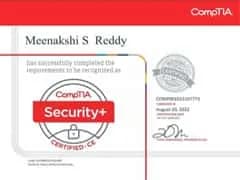
Certificates earned by our learners

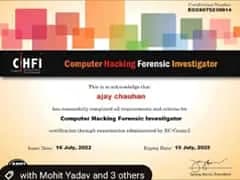
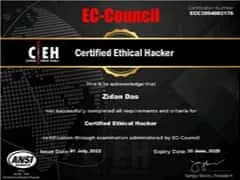
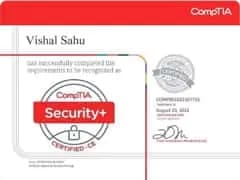
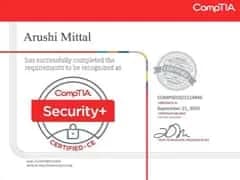
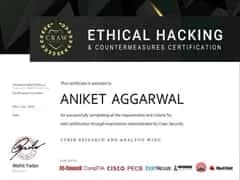
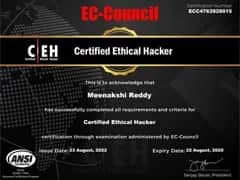
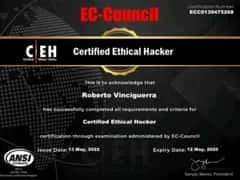

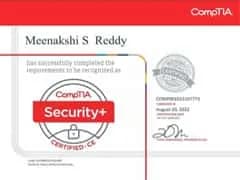
What our learners say

Saket Chaudhary
NewI recently completed my CEH Practical course and exam from Craw Security, and the experience was truly exceptional. The course was well-structured, covering all essential aspects with hands-on practical training. The mentors were incredibly supportive throughout the journey, especially my instructor, Mohit Kumar Sir, whose guidance and expertise played a crucial role in my learning process. His dedication and willingness to help made the course even more valuable. I highly recommend Craw Security to anyone looking to enhance their cybersecurity skills. A well-deserved 5 out of 5 stars 🤩

Philis Mutamba
Really enjoyed my CEH training with Craw Security. My trainer Robin Paul was patient, clear, and very knowledgeable. The course structure and hands-on sessions were really really helpful.

Kashish Jaiswal
I recently completed my CEH (Certified Ethical Hacker) training at Craw Security, and also took the CEH certification exam. My overall experience was highly positive. The training was well-structured and delivered by experienced instructors (Mohit Sir) who had in-depth knowledge of ethical hacking concepts. The course covered a wide range of topics, They were patient in clearing doubts and ensured that all students, regardless of their prior experience, could grasp the topics effectively. The institute provided excellent guidance on exam preparation, including practice tests, study materials, and exam-taking strategies. Their support team was also helpful in scheduling the exam and addressing any queries related to certification. I highly recommend Craw Security to anyone looking for any Security related training’s. Would definitely consider returning for more advanced cybersecurity courses in the future!

Keshav gupta
I recently took Linux classes at Craw Security Institute, and it was an excellent learning experience. The course was well-structured, and the practical knowledge I gained has been invaluable. A special thanks to Anand Sir for his dedication

Tushar Meena
Amit Sharma Sir is an exceptional AWS Associate teacher at Craw Saket. His deep knowledge, clear explanations, and practical teaching approach make complex topics easy to understand. He's always supportive and ready to clear doubts. Truly appreciate his dedication and teaching style — highly recommended for anyone looking to learn AWS the right way!

Vikash Yadav
The experience at Craw Security has been excellent! The learning environment is welcoming, and the staff is supportive and responsive. Even beginners feel well-guided throughout the program. It's a supportive place to build a strong foundation in cybersecurity.

Rohit Sharma
I recently completed CEH practical on craw security. Which was a great decision i made fr they're well organised with proper support and my mentor Robin paul who guided me throughout i personally thank him here..

Ankit Verma
Craw Cyber Security provides excellent training with a strong focus on practical, hands-on learning. I especially appreciated their Red Hat course, which was well-structured and aligned with real exam scenarios. The instructors are highly knowledgeable, and the staff is very supportive and friendly, always ready to assist. It's a great place to start or grow your career in cybersecurity and Linux administration.

Amit Kashyap
I had a great experience with CRAW Security! The cybersecurity training was practical and industry-relevant. The trainers were very supportive throughout. Special thanks to Mansi Ma'am from the placement cell for her constant support and guidance — because of her help, I got successfully placed. Highly recommend this institute!

Yashika singhaniya
Grateful to Craw Security for an excellent learning experience in cybersecurity. A big thank you to Sahil Sir and Bhumika Ma’am for their mentorship, support, and encouragement during my learning process.

Charan Kumar reddy Yandapalli
I am very happy to participated as a member of CRAW security. This company is very Good at atmosphere and very good for learning also. I'm strongly recommending Craw security to your cyber security future 👍
Where our learners go on to work